



Sitemap
Vision Creates Future

Selecting an aerial work platform is no longer a matter of comparing platform height and price alone. Contractors, rental companies, facility managers, and industrial operators must evaluate operating environment, terrain conditions, working height, power source, transport requirements, and long-term service support. As a manufacturer, we have seen that many purchasing mistakes originate from incomplete application analysis rather than equipment performance itself.
This guide explains the main selection factors for 2026 and provides a structured way to choose the right machine for indoor maintenance, outdoor construction, rough-terrain projects, and high-reach operations. We also introduce the product portfolio and support capabilities of Zoomlion Access to help buyers build a reliable equipment strategy.
Define the Working Environment First
The first question we ask is where the machine will operate. An elevated work platform used inside a warehouse has very different requirements from one used on a bridge or industrial site.
Indoor applications usually require compact dimensions, low noise, and zero-emission operation. Electric scissor lifts or electric boom lifts are often the preferred choice because they can pass through standard doorways and operate safely on finished floors.
Outdoor applications place greater emphasis on gradeability, wind resistance, tire configuration, and travel speed. Diesel-powered boom lifts or rough-terrain scissor lifts are typically more suitable for open construction sites.
Match the Working Height to the Actual Task
Many buyers choose a machine with significantly more height than the job requires. This can increase purchase cost, transportation expense, and storage requirements without improving productivity.
We recommend calculating the required platform height based on the highest working point, the operator’s reach, and any obstacles that may limit positioning. A moderate safety margin is appropriate, but excessive oversizing should be avoided.
Evaluate Terrain and Ground Conditions
Terrain is one of the most important factors affecting machine selection. Smooth concrete floors allow the use of smaller electric machines, while uneven ground requires higher ground clearance and stronger traction.
A machine intended for rough terrain should have four-wheel drive, oscillating axles, and tires designed for loose or muddy surfaces. These features improve stability and reduce the likelihood of getting stuck on undeveloped job sites.
When comparing equipment from different aerial work platform manufacturers, pay attention to gradeability, axle design, and allowable working slope rather than relying only on engine power.
Choose the Right Equipment Type
Different platform structures are designed for different access challenges. We generally divide selection into four main categories.
Scissor Lifts
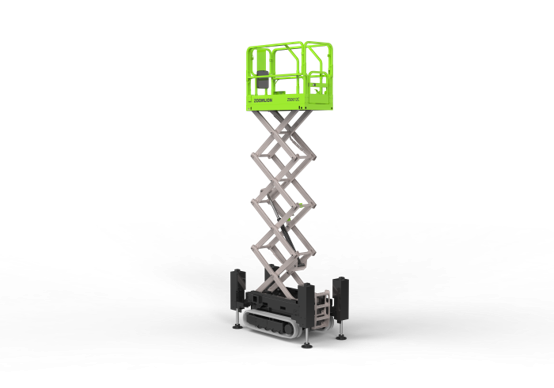
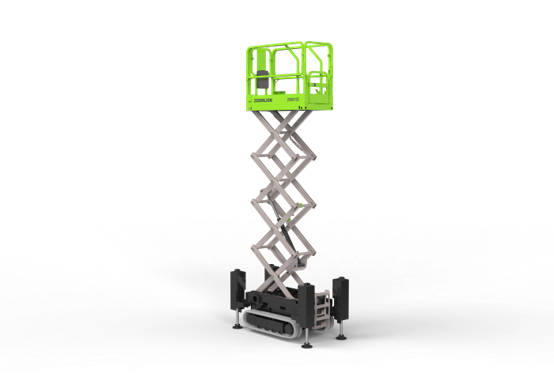
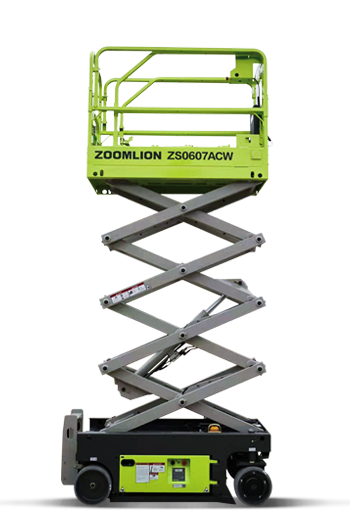
A scissor elevated work platform is ideal when operators need vertical access and a relatively large platform area for tools and materials.
These machines are commonly used for ceiling installation, electrical work, HVAC maintenance, and warehouse operations. They offer good lifting capacity and straightforward operation, but they have limited horizontal outreach.
Articulating Boom Lifts
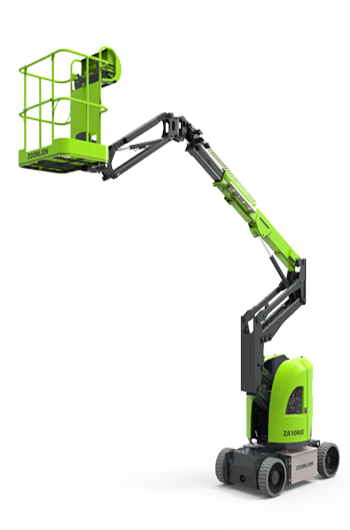
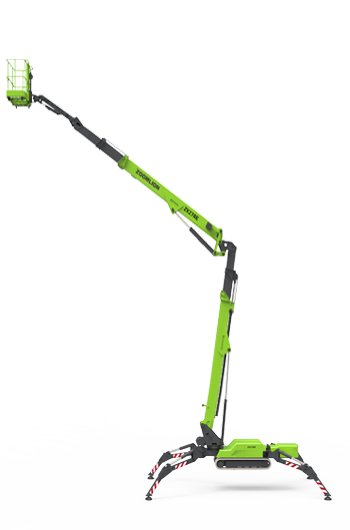
Articulating boom lifts are designed for applications with obstacles. The multi-joint boom structure allows the platform to reach up and over pipes, equipment, or structural elements.
They are widely used in industrial plants, stadiums, airports, and renovation projects where direct vertical access is not possible.
Telescopic Boom Lifts
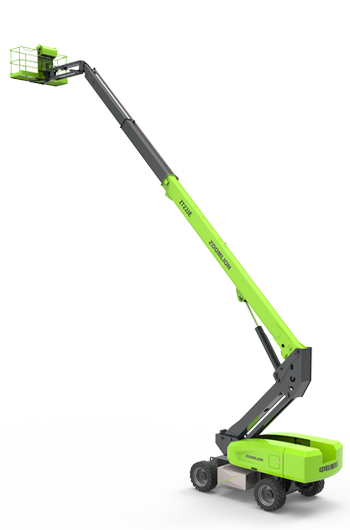
Telescopic booms provide the greatest horizontal outreach and are well suited for steel erection, bridge construction, and large infrastructure projects.
Their straight-boom design allows fast positioning at extended distances, although they generally require more operating space than articulating models.
Vertical Mast Lifts
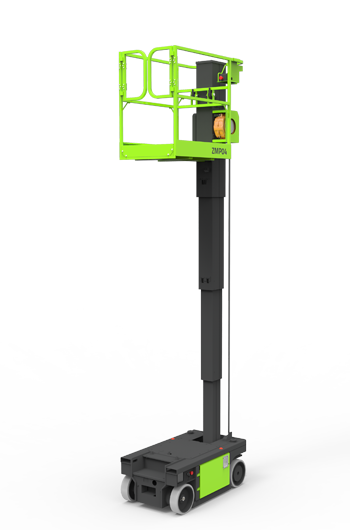
Vertical mast lifts are compact machines intended for confined indoor areas. They are easy to transport and can often be operated in narrow aisles or crowded commercial spaces.
Decide Between Electric and Diesel Power
Power source selection should be based on ventilation, duty cycle, and site logistics.
Electric machines are suitable for indoor use, food and pharmaceutical facilities, data centers, and locations with strict emission requirements. They also have lower routine maintenance requirements because they contain fewer engine-related components.
Diesel machines remain the practical choice for remote outdoor projects, long operating shifts, and sites where charging infrastructure is unavailable. Hybrid solutions are also becoming more common for mixed indoor-outdoor applications across the industry.
Consider Transportation and Storage
A machine that performs well on site may still create logistical problems if transport has not been considered.
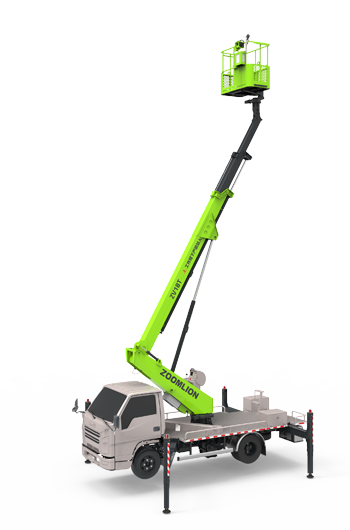
Before purchasing, we verify overall weight, transport length, transport height, and loading method. Some high-reach boom lifts require special trailers or permits, while compact electric models can be moved with standard equipment.
Storage conditions also matter. Battery charging areas, weather protection, and available floor space should be evaluated as part of the total ownership plan.
Look Beyond the Purchase Price
The initial purchase price represents only part of the equipment cost. We encourage buyers to compare total cost of ownership over the expected service life.
Important factors include preventive maintenance intervals, parts availability, energy or fuel consumption, tire replacement cost, and expected residual value. Machines with strong service networks and readily available components often provide lower lifetime operating costs even if their initial price is slightly higher.
This is also where the reputation of aerial work platform manufacturers becomes important. A supplier with established technical support, training resources, and spare-parts distribution can reduce downtime and simplify fleet management.
A Practical Selection Checklist
Before placing an order, work through the criteria below as a standard procurement process:
Define operating scenario: indoor or outdoor operation
Confirm required maximum platform height and horizontal outreach
Assess ground surface and allowable slope conditions at worksites
Select power type: electric, diesel, or hybrid
Verify platform load capacity to accommodate staff and working tools
Check constraints for equipment transportation and on-site storage
Confirm availability of local service and spare-parts supply
Ensure full compliance with regional safety regulations
Following this structured evaluation process enables procurement teams to benchmark different machine models objectively. It minimises common purchasing risks, including choosing under-specified equipment or overinvesting in unnecessarily large units.
Why Many Buyers Choose Zoomlion Access
Zoomlion Access is the aerial work platform division of Zoomlion and provides a full range of access equipment for construction, industrial, logistics, and infrastructure applications. Our portfolio includes electric and diesel scissor lifts, articulating boom lifts, telescopic boom lifts, and vertical mast lifts covering a wide range of working heights and operating conditions.
We focus on practical engineering, safety compliance, and lifecycle support rather than one-size-fits-all recommendations. Our technical teams work with customers to evaluate job-site conditions, duty cycles, and fleet planning requirements so that the selected machine matches the actual application.
Buyers can explore our complete product range and technical specifications at Zoomlion Access official website.
Making a Reliable Long-Term Investment
Aerial work platform selection should begin with application analysis and end with lifecycle planning. By evaluating environment, height, terrain, power source, transport, and service support in a structured way, we can choose equipment that improves productivity while maintaining safety and controlling operating costs.
As aerial work platform manufacturers, Zoomlion Access delivers complete equipment ranges alongside professional technical support, customized fleet configuration consultation, official operator training programs, and fast-response global after-sales service for worldwide clients. For contractors, rental fleets, distributors and industrial operators looking for a reliable partner in 2026, feel free to reach out to Zoomlion Access to review your project demands and match optimal access equipment tailored to your local market and job applications.
If you have any questions, please feel free to leave us a message